How to Calculate the BARF Diet for Dogs (The 80/10/10 Macro Formula)
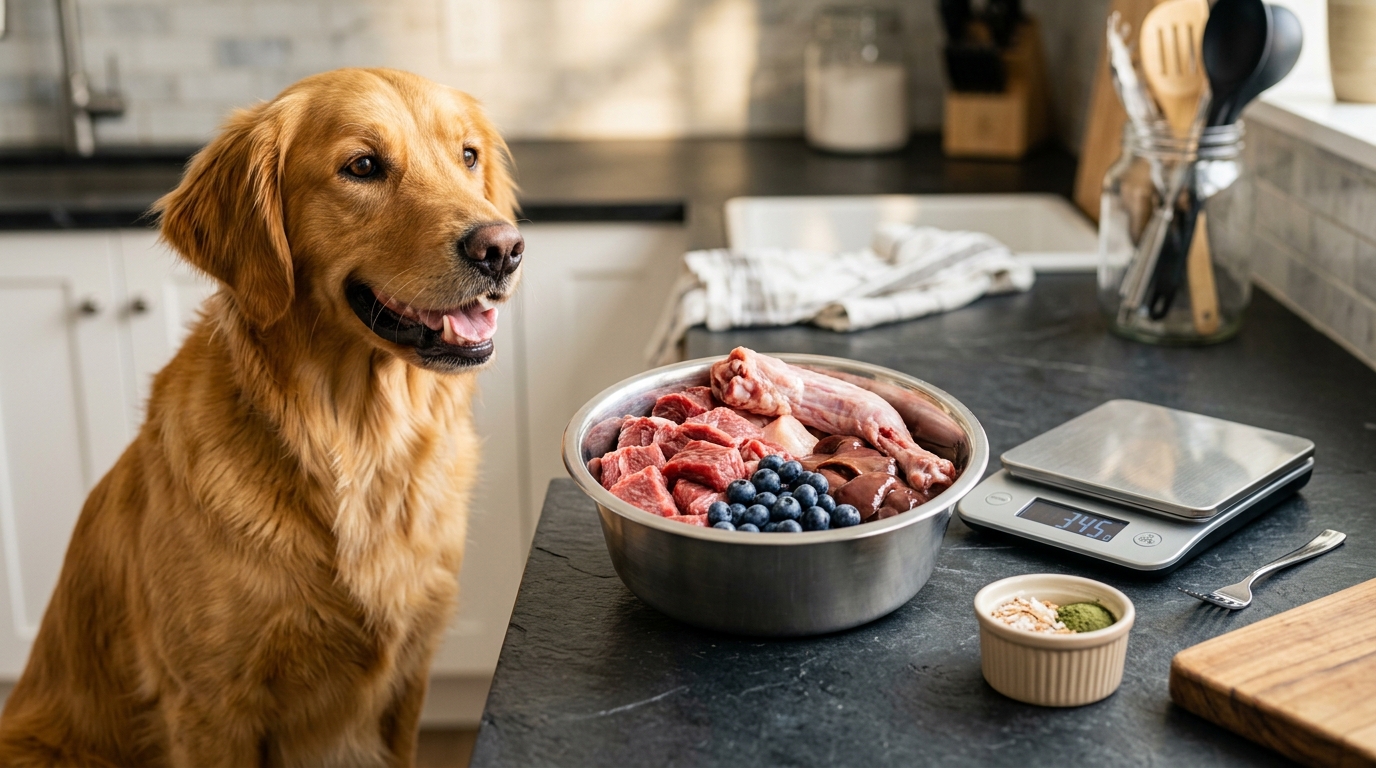
Commercial kibble was invented for human convenience in 1956, not ancestral biology. Dogs are facultative carnivores whose digestive physiology requires raw moisture, live enzymes, and bioavailable skeletal minerals.
However, dumping a grocery-store pack of boneless chicken breast into a bowl will quickly cause catastrophic calcium deficiency and skeletal deformity. A biologically complete raw diet relies on the strict, clinically validated BARF (Biologically Appropriate Raw Food) 80/10/10 rule. Below is the exact veterinary mathematical formula and our 0ms real-time calculator.
The 4-Week Cold-Turkey vs. Gradual Transition Protocol
Never mix dry processed kibble and raw meat in the same physical bowl. Kibble digests through slow alkaline carbohydrate fermentation (taking 10 to 14 hours), whereas raw animal protein digests rapidly in high gastric acid (4 to 8 hours). Mixing them leads to gastrointestinal stagnation, gas, and digestive confusion.
Single Protein Introduction (Lean Poultry or Turkey)
Feed 100% boneless ground turkey or chicken breast mixed with 10% pureed pumpkin and a pinch of ground eggshell calcium. This resets the stomach pH without overwhelming enzyme pathways.
Introduce Beginner Raw Meaty Bone (Chicken Necks)
Introduce raw chicken necks or wings. The natural edible bone hardens the stool immediately and supplies whole-food calcium and phosphorus.
Introduce Liver Micro-Doses (2.5% to 5%)
Introduce grass-fed beef liver at half ration (2.5%), graduating to 5% by day 21. If stools become loose, add an extra chicken neck for 48 hours to re-solidify.
Complete 80/10/10 Integration & Red Meat Rotation
Add kidney or spleen (5%) and introduce a second red meat protein (beef or lamb) along with whole wild sardines for anti-inflammatory EPA/DHA omega-3s.
Critical Raw Feeding Mistakes That Endanger Canines
Never Feed Cooked Bones Under Any Circumstance
Raw bone is soft, flexible, and chemically digested into liquid calcium phosphate by concentrated canine stomach acid. Cooking irreversibly alters the collagen matrix, transforming pliable bone into brittle, porcelain-like shards that splinter and perforate the esophagus, stomach, or colon.
Boneless Meat Only Diets
Feeding grocery store muscle meat alone creates a fatal 1:30 inverted calcium-to-phosphorus ratio. Within 6 months, the dog's body leaches calcium directly out of its own skeleton, causing Nutritional Secondary Hyperparathyroidism.
Weight-Bearing Beef Marrow Bones
Cow and bison femur bones are built to support 2,000 lbs of animal weight. They are far harder than canine enamel. Feeding large cut marrow femurs causes fractured carnassial teeth requiring $1,500 extractions.
Overdosing Secreting Liver Past 5%
Because dogs love liver taste, well-meaning owners feed 15% to 20% liver. This induces chronic Vitamin A toxicity, loose black stools, and cervical spondylosis.
Ignoring Deep Freezing Protocols
Always source human-grade meat and deep-freeze pork, wild game, or fish at -4°F (-20°C) for a minimum of 21 days to neutralize any potential cysts or parasites before feeding.
Explore Canine Raw Programmatic Cheat Sheets
Browse our complete programmatic index of 20 lab-tested canine raw ingredients with exact calcium ratios, bone percentages, and veterinary feeding rules:
Frequently Asked Questions: BARF Diet
Does raw chicken contain Salmonella that can harm my dog?
A healthy dog's gastrointestinal tract is short (1/3 the length of a human's) and its gastric acid reaches pH 1.0 to 2.0 when raw meat is ingested. Bacteria such as Salmonella and E. coli cannot colonize this hyper-acidic, rapid-transit environment. However, human caregivers must practice standard kitchen hygiene: wash hands, stainless bowls, and cutting boards with hot soapy water.
How do I calculate raw meaty bones if chicken backs are only 50% bone?
Our 0ms calculator outputs pure bone weight (10% of total diet). If your 50 lb dog requires 2.0 oz of pure bone daily, and chicken backs are 50% bone, you simply feed 4.0 oz of chicken backs (which supplies 2.0 oz of pure bone and 2.0 oz of meat toward the 80% muscle meat bucket).
Can I feed a raw diet to an 8-week-old puppy?
Yes, but puppies have strict calcium requirements and cannot regulate intestinal calcium absorption like adults. Puppies require a higher food volume (6% to 8% of current body weight) and the calcium-to-phosphorus ratio must be rigidly balanced between 1.2:1 and 1.4:1 to prevent developmental orthopedic disease (DOD).